For a local business, the difference between page two of Google and the Map Pack is the difference between a quiet week and a fully booked month. Local SEO is, by far, the highest-leverage marketing channel available to small businesses — and it's also the one most owners get wrong because the rules are different from "regular" SEO.
This is the exact playbook we run for local SEO services clients at WExposure. Work through it in order and you'll see real movement within a quarter.
The three pillars of local rankings
Google's local algorithm is famously summarized as three factors: proximity (how close you are to the searcher), relevance (how well your business matches what they typed), and prominence (how well-known and credible you appear to be). You can't move proximity. You can absolutely move the other two.
1. Google Business Profile optimization
Your GBP is the front door of the Map Pack. A profile with a generic category, three photos, no posts, and a single review is invisible — even if the business itself is excellent. Done correctly, Google Business Profile optimization unlocks more first-page visibility than any other single tactic.
What "optimized" actually means
- Primary category set to the most specific match (not the broadest)
- Every secondary category that legitimately applies, added
- Service list completed, each service with its own keyword-rich description
- 20+ high-quality photos, refreshed monthly
- Weekly Google Posts tied to active offers and seasonal content
- Q&A section seeded with the questions customers actually ask
- Attributes (women-led, wheelchair accessible, free Wi-Fi, etc.) fully filled
2. Reviews and ratings — the unfair advantage
Reviews influence both rankings and conversion rates. Two businesses next door to each other can have a 5x difference in lead flow purely because of review velocity and recency. Google heavily weights:
- Volume — total number of reviews
- Velocity — how many you get per week/month
- Recency — reviews from the last 30/90 days
- Keyword density — reviews that mention services and locations
- Owner responses — every review, good or bad, replied to
A business with 47 reviews from the last 90 days will out-rank a business with 400 reviews from five years ago, almost every time.
3. Local citations and NAP consistency
Citations are mentions of your business name, address, and phone number (NAP) across the web — Yelp, BBB, Apple Maps, Bing Places, Yellow Pages, industry directories, chambers of commerce. Google cross-references them to verify you're a real, stable business. If your phone number is one digit different on three citations, Google's confidence drops and your rankings suffer.
Citation priorities
- Tier 1: Google, Apple Maps, Bing, Facebook, Yelp, BBB
- Tier 2: Industry-specific directories for your vertical
- Tier 3: Local chamber, BNI, sponsorship pages, news mentions
4. Local backlinks beat generic backlinks
For local SEO, one link from a local chamber, news outlet, or charity event you sponsor is worth more than fifty generic guest posts. Build links that geographically make sense: school newsletters, neighborhood blogs, local business spotlights, community sponsorships.
5. Location pages and service pages
If you serve five cities, you need five well-written city pages — not one "areas we serve" list. Each location page should include unique copy, a local testimonial, an embedded map, and a few hundred words about your work in that specific area. Pair this with our website design services build process and the pages slot into a system that scales.
6. Local keyword research
Local keyword research is about modifiers, not just head terms. "Plumber" is a vanity goal. "Emergency plumber Bethesda", "tankless water heater repair Silver Spring", and "after-hours drain cleaning Rockville" are the queries that actually convert. Build content around the long-tail modifiers your customers type at the moment they need you.
7. Map Pack rankings — what actually moves them
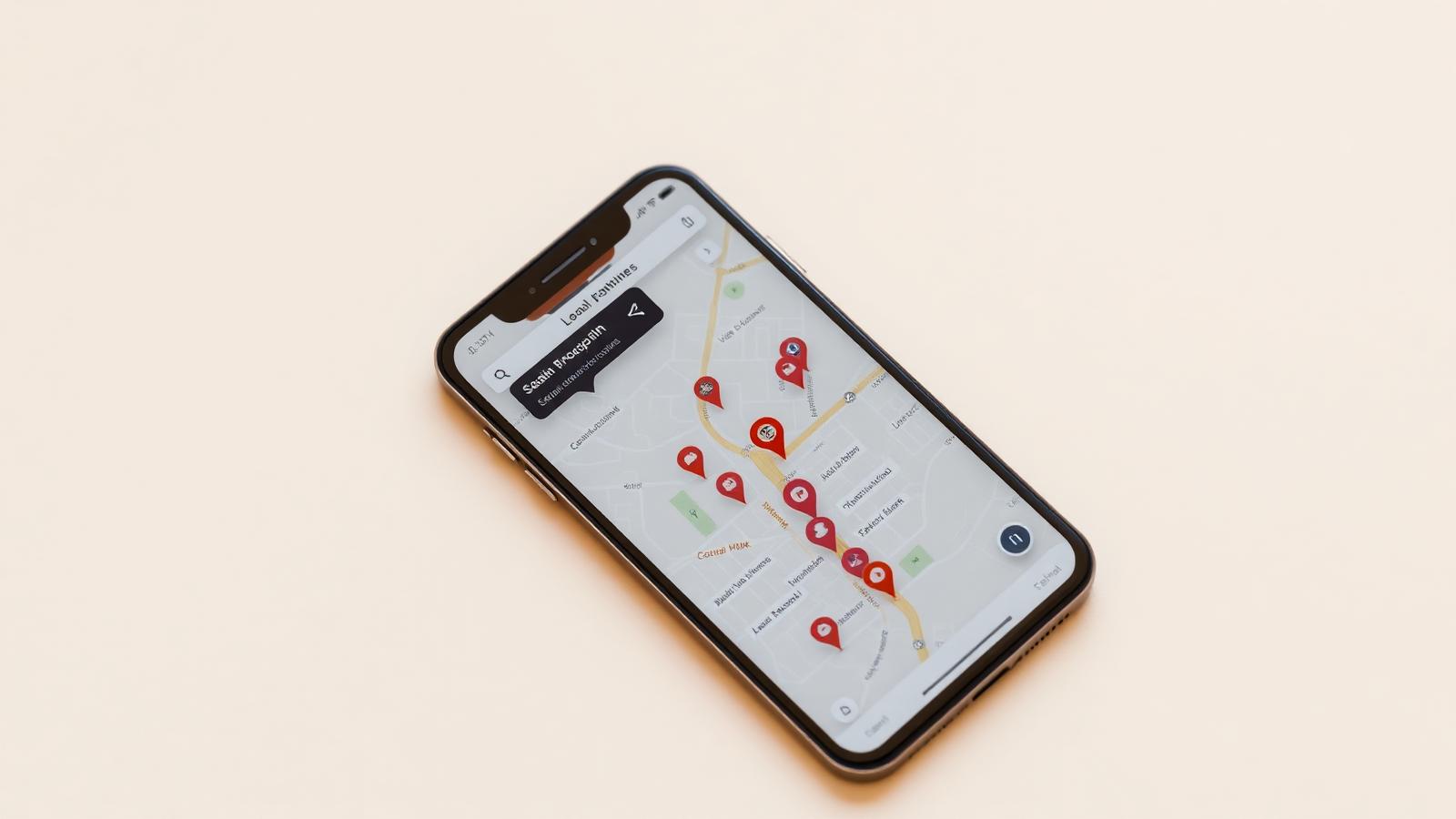
The Map Pack is its own ranking system layered on top of organic results. The biggest movers we see, in order:
- GBP optimization (category, services, photos, posts)
- Review velocity and keyword-rich review content
- On-page SEO on your website (especially home + service pages)
- NAP-consistent citations
- Local backlinks
- Behavioral signals (clicks, calls, direction requests from the listing)
8. Common local SEO mistakes
- Using a virtual office or PO box as the GBP address
- Choosing the broadest possible primary category
- Keyword stuffing the business name (Google now penalizes this aggressively)
- Ignoring spam listings instead of reporting them
- Letting NAP drift across citations over years
- Treating GBP as "set it and forget it"
9. Measuring what matters
Vanity metrics will lie to you. The numbers that correlate with revenue are: Map Pack impressions, direction requests, profile calls, "website" clicks, and form submissions tagged with the source. Track those monthly. If they're flat, the strategy is wrong.
Ready to move?
If you want a real audit of where you stand — current Map Pack visibility, citation health, GBP score, and the top three things to fix this month — we'll run it for free. Start on our contact page and we'll come back inside 48 hours with a written plan.
Frequently asked
How long does local SEO take to work?
Most businesses see meaningful Map Pack movement within 60–90 days, with full results in 4–6 months. Newer businesses or highly competitive metros can take 6–12 months. Consistency of work matters more than budget size.
What's the single most important local SEO ranking factor?
Proximity and relevance dominate, but the lever you can actually move is your Google Business Profile combined with a steady flow of recent, keyword-rich reviews. Together they account for the majority of Map Pack movement for most small businesses.
Do I still need a website if I have a Google Business Profile?
Yes. Your GBP and your website are tightly linked — the website provides the topical, schema, and authority signals Google uses to validate the GBP. Without a strong site, your GBP ceiling is low.