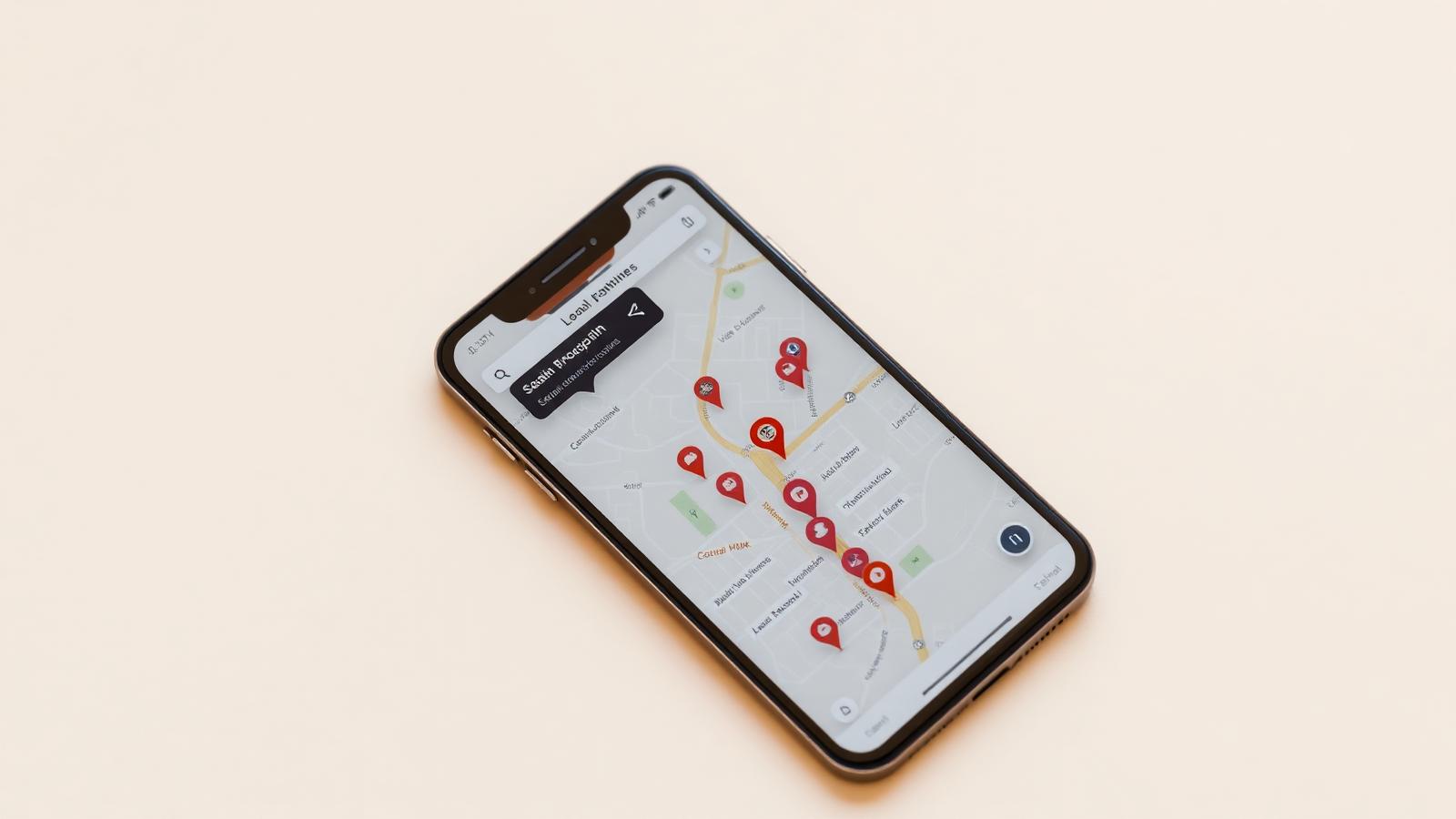
The internet has changed more in the last 24 months than in the previous decade. Buyer behavior, search algorithms, AI overviews, mobile usage patterns — all of it has shifted. And yet many local businesses are still running websites that were built (or rebuilt with a drag-and-drop tool) in 2019 or earlier.
That gap between how customers now research and what they land on is quietly costing local businesses thousands of dollars in lost work every month. Below are the ten reasons we keep seeing the same pattern: businesses that invest in a real, professionally designed website outgrow their competitors — even when their pricing, location, and service quality are identical.
1. DIY website builders quietly fail in 2026
Drag-and-drop builders are great for hobby projects. They are not great for businesses that depend on lead flow. The problem isn't that they "look bad" — many of them look fine. The problem is everything you can't see: bloated code, slow servers, poor mobile rendering, and zero conversion architecture.
When we audit DIY sites we routinely find load times over 6 seconds, broken mobile menus, contact forms that silently fail, and tracking pixels that have never fired. The site looks fine to the owner — and is leaking 40–70% of the people who land on it. A purpose-built website design services solves all of this from the foundation up.
2. Mobile-first is no longer optional — it's the entire game
More than 75% of local searches happen on a phone. Google indexes and ranks the mobile version of your site, not the desktop version. If your mobile site has tiny tap targets, a buried phone number, or a contact form that doesn't autofill, you are competing with one hand tied behind your back.
A professional website is designed mobile-first: thumb-friendly buttons, sticky call-now bar, instant-load hero, and forms that submit in under three taps. Every other "screen" is downstream of that decision.
3. Conversion optimization is a science, not a vibe
A pretty website that converts at 1% will lose to an ugly website that converts at 4% every single day. Conversion design is about the order of information, the friction of the form, the proof above the fold, and the clarity of the next step.
A site that converts 4% of visitors instead of 1% is, mathematically, a 4x marketing budget — with zero increase in ad spend.
Professional design teams build conversion architecture before they touch a pixel: who the visitor is, what objection they arrive with, what proof neutralizes it, and what one action you want them to take. If you're unsure where yours stands, our free website audit maps it out for you.
4. Trust and credibility are decided in under five seconds
Visitors decide whether you look legitimate before they consciously read a single word. Typography, spacing, photo quality, and load speed do most of that work. An outdated or template site signals: "this business might be outdated too." A clean, custom site signals: "these people care about details — they'll care about my project."
5. Local search visibility is now a code-level concern
Showing up in Google's Map Pack and local results requires technical signals your site has to send: clean schema markup, location pages, embedded maps, NAP consistency, and crawlable content. Template builders cannot generate most of these correctly. Pairing a professional site with focused local SEO services compounds the effect — both halves rely on the other to work.
6. Lead generation has to be engineered, not hoped for
A 2026 website is not a brochure. It's a 24/7 salesperson. That means strategically placed CTAs, instant-quote forms, click-to-call on mobile, calendar embeds, lead magnets, and follow-up automations. None of this happens by accident — it's designed in from the start.
- Above-the-fold CTA tied to the highest-value action
- Sticky call/SMS bar on mobile
- Multi-step forms that feel shorter than they are
- Auto-responder emails that book the next step
7. Speed is a ranking factor and a revenue factor
Every 100 ms of delay on mobile costs around 1% of conversions. A site that loads in 1.2 seconds versus 4.5 seconds isn't just "snappier" — it's printing money the slower site can't. Professional websites are deployed on edge infrastructure, with optimized images, minimal JavaScript, and aggressive caching baked in. That's also why website hosting & care matters as much as the design itself.
8. User experience is the new brand
Customers won't remember your gradient. They'll remember how easy it was to find your hours, get a quote, or book a call. A professional team designs flows — not pages — so the entire journey from ad click to thank-you screen feels considered.
9. SEO compounds — but only on a properly built foundation
Content marketing, backlinks, and local SEO all amplify what's already there. If the foundation is broken, those investments amplify the broken parts. A professional site ships with clean URLs, proper headings, schema, internal linking, sitemaps, and Core Web Vitals in the green — everything an SEO program needs to actually work.
10. Competitive advantage is now decided online
In most local markets, the business with the best website wins more work than the business with the best service. That isn't fair — it's just true. A professional site closes that gap, then opens a new one in your favor. Combined with Google Ads management and Google Business Profile optimization, it becomes a moat your competitors can't easily close.
Where to go from here
If you're staring at a site you know isn't pulling its weight, the cheapest way to find out what's broken is to have someone look at it. We do this for free — a 15-minute walkthrough of your homepage, mobile experience, speed, and conversion gaps. Grab a slot on our contact page or request an instant audit and we'll send the report within 48 hours.
Frequently asked
Do small local businesses really need a custom website in 2026?
Yes. Customers now research locally on mobile before they ever call. A slow, generic template site signals that the business itself is generic. A professional site signals trust and increases call-to-customer conversion rates, often by 2–4x.
How much should a local business spend on a professional website?
Most established local businesses invest between $3,000 and $15,000 on a professional site, depending on scope. The number to watch is payback period — a well-built site typically pays for itself within 60–120 days through higher conversion rates and lead quality.
Will a new website help my Google rankings?
It can — significantly. Speed, mobile-friendliness, structured data, and on-page SEO are direct ranking factors. Most professional rebuilds move sites 10–40 positions for their core local keywords within the first 90 days.